| GREEN BRIDGE SOCIETY |
Patient & Industry Education |
|
 |
|
January Newsletter
Happy New Year from all of us at Green Bridge Society. We recieved a ton of respones for the Trulieve giveaway. Check out our Terrapin Swag Bag giveaway below! Thank you to everyone who joined us for Green Bridge Live last month. We’re excited to announce our next live event on January 28 at 7 PM.
As winter sets in, many patients are balancing seasonal stress along with expiring medical cards. Our goal is to make renewals straightforward, affordable, and as supportive as possible.
Coming due for renewal?
Visit greenbridgesociety.com or call (814) 360-5353.
Renewals: $50 • New patients: $125
|
 |
|
From Ron
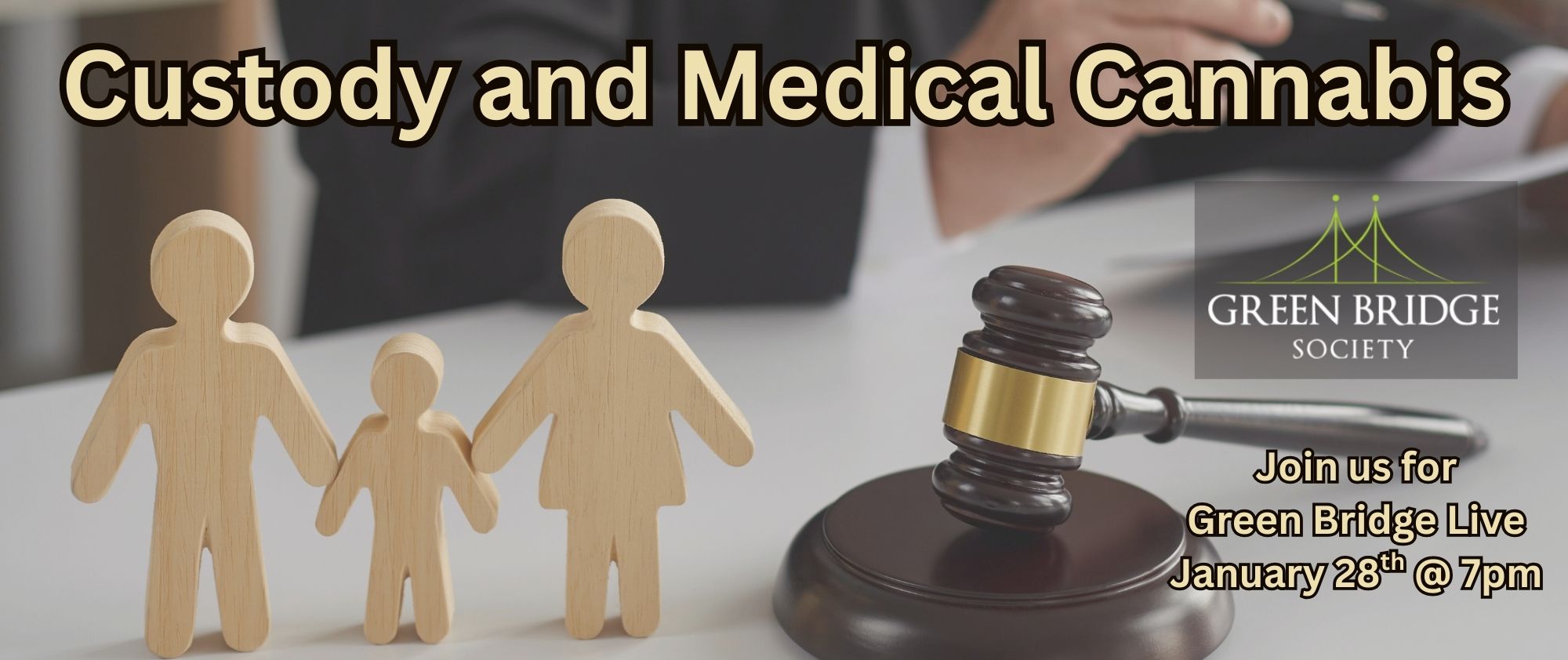
As we kick off the new year, I want to name something many patients are afraid to talk about: custody and cannabis. It’s the focus of our next Green Bridge Live on January 28 at 7 PM.
My family and I have lived this firsthand. We’ve been through two custody cases, involving two different children, in two different counties, with completely different outcomes. That contrast was eye-opening. It reinforced an important truth: the system is not always consistent, and stigma or misunderstanding can still shape real-world decisions, even for lawful medical patients.
During the event, we’ll focus on practical, patient-safe guidance: responsible medical use, communication, documentation, and common mistakes to avoid. This is education, not legal advice, but it is the kind of clarity that helps families make better decisions and feel less alone.
What we’ll cover (high level)
- How stigma shows up in custody conversations and how to respond calmly
- Responsible use habits that support stability and credibility
- Documentation and consistency: what helps, what hurts
- Avoiding common pitfalls (social media, “recreational” framing, sloppy language)
- Where Green Bridge can support patients with education and resources
If custody is part of your reality, or you worry it could become part of it, please join us on January 28.
|
|

|
Cannabis Rescheduling and the CBD Medicare Pilot: What’s Actually Happening
You have probably seen the headlines. Cannabis rescheduled. CBD coming to Medicare. Major reform is finally here. While those statements are not entirely wrong, they simplify what is actually a careful and deliberate federal shift. The recent executive order represents meaningful progress, but the details matter.
The big picture
The executive order directs federal agencies to finish the process of moving marijuana to Schedule III, expand medical cannabis and CBD research, and develop clearer regulatory standards for hemp-derived cannabinoid products. It does not instantly legalize cannabis, and it does not flip a switch on banking or federal reimbursement overnight. What it does do is push stalled processes forward in a decisive way.
What rescheduling really means
The President cannot personally change cannabis scheduling by decree. Instead, the order instructs the Attorney General and the DEA to complete the existing rulemaking process as quickly as federal law allows. If finalized, Schedule III would formally recognize accepted medical use and lower abuse potential. This would align federal policy more closely with decades of clinical experience and state-level medical programs. It would also remove major tax and research barriers that have limited legitimate medical cannabis progress.
The CBD and Medicare piece nuance matters
You may have heard about a CBD Medicare pilot and figures, such as up to $500 per year, being discussed. Those numbers originate from discussions and reports from surrounding agencies, rather than being directly stated in the executive order itself. What the order actually does is instruct HHS, CMS, FDA, and NIH to build real-world evidence models and explore pathways to improve access to hemp-derived cannabinoid products within existing federal law. In practice, this is how Medicare pilots typically begin, with data collection, defined guardrails, and limited models before broader coverage decisions are made.
A quiet but important hemp signal
One of the most overlooked sections of the order focuses on hemp-derived products, particularly full-spectrum CBD. The administration openly acknowledges that current federal definitions are unclear and that THC exposure from legal hemp products lacks consistent standards. The order calls for clearer rules that could include limits per serving, ratio considerations, and improved labeling rather than leaving patients, clinicians, and manufacturers guessing.
Why this is still good news
This executive order does something the industry has needed for a long time. It moves cannabis policy out of slogans and into evidence, medicine, and regulation. It recognizes that millions of Americans are already using cannabis and CBD for legitimate health reasons and that federal policy must evolve to reflect that reality.
Change will not happen overnight, but the direction is clear. Research barriers are coming down. Medical legitimacy is being reinforced. And for patients, especially seniors, the door to safer, more affordable access is opening wider than it ever has before.
|
|
|
Most Americans Support Cannabis Legalization, Medical Use, and Federal Reclassification
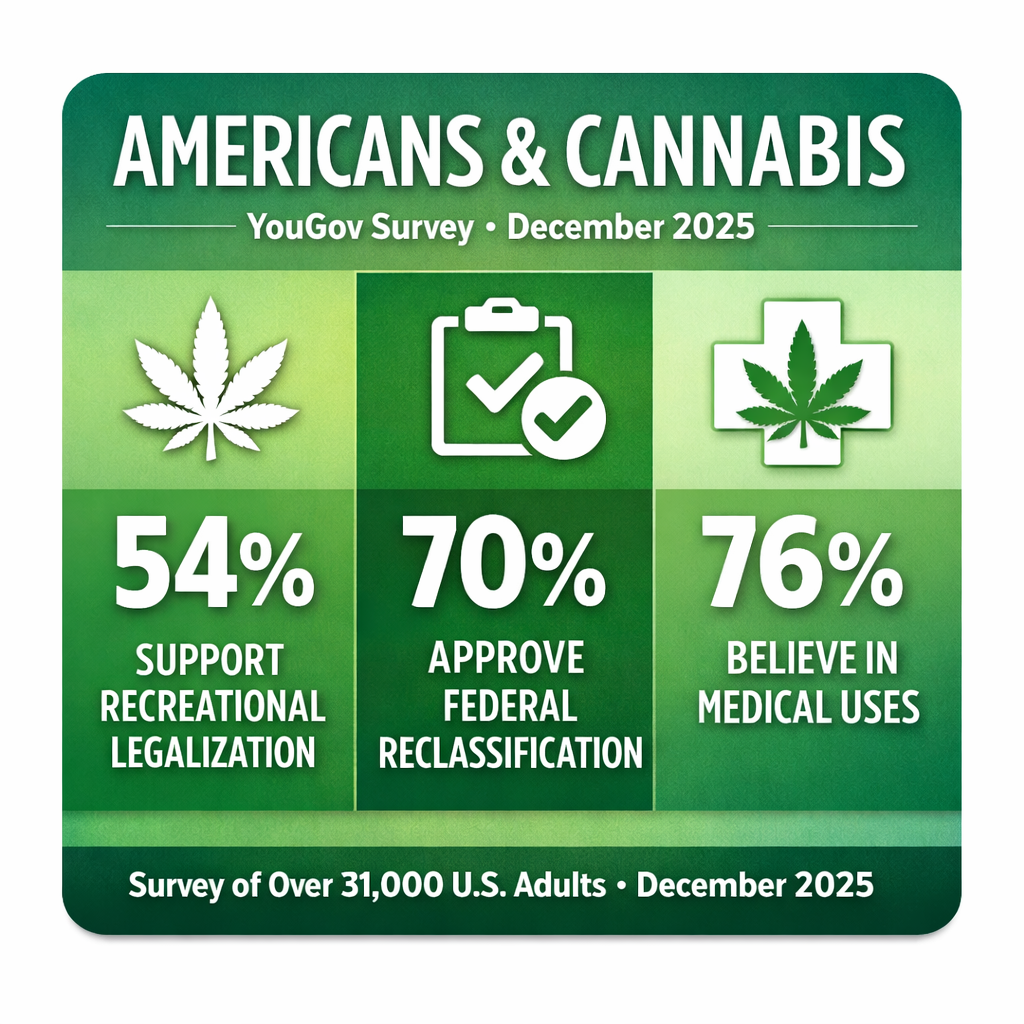
New national survey data show that public support for cannabis reform in the United States remains strong and continues to grow. A 2025 YouGov survey of more than 31,000 U.S. adults found that a majority of Americans support recreational cannabis legalization, recognize legitimate medical uses for cannabis, and approve of federal action to reclassify marijuana to a less restrictive category.
According to the survey, 54% of U.S. adults support legalizing recreational cannabis, while only 27% oppose it and 19% remain unsure. Support for legalization extends beyond one political group, with majorities of Democrats and Independents in favor and Republicans nearly evenly split. These findings reflect a steady shift in public opinion over the past decade, as more Americans gain firsthand experience with state-regulated medical and adult-use cannabis programs.
The survey also found strong backing for federal reclassification. Seventy percent of respondents approved of moving cannabis out of the most restrictive drug category, allowing for expanded medical research. Support was broad across political lines, with clear majorities of Democrats, Independents, and Republicans in favor. Reclassification is widely seen as a necessary step to reduce research barriers and better align federal policy with existing state medical cannabis programs.
Perhaps most notably, Americans overwhelmingly recognize cannabis as medicine. Seventy-six percent of respondents said marijuana definitely or probably has legitimate medical uses, while only a small minority disagreed. This consensus mirrors what patients and clinicians have observed for years: cannabis is being used to manage pain, sleep issues, appetite loss, anxiety, and other symptoms where conventional options are often limited or poorly tolerated. Together, these findings reinforce what many patients already know thtat public opinion, clinical experience, and policy momentum are increasingly moving in the same direction.
|
|
|
A THC-Dominant Full-Spectrum Cannabis Drug Shows Breakthrough Results in Chronic Pain
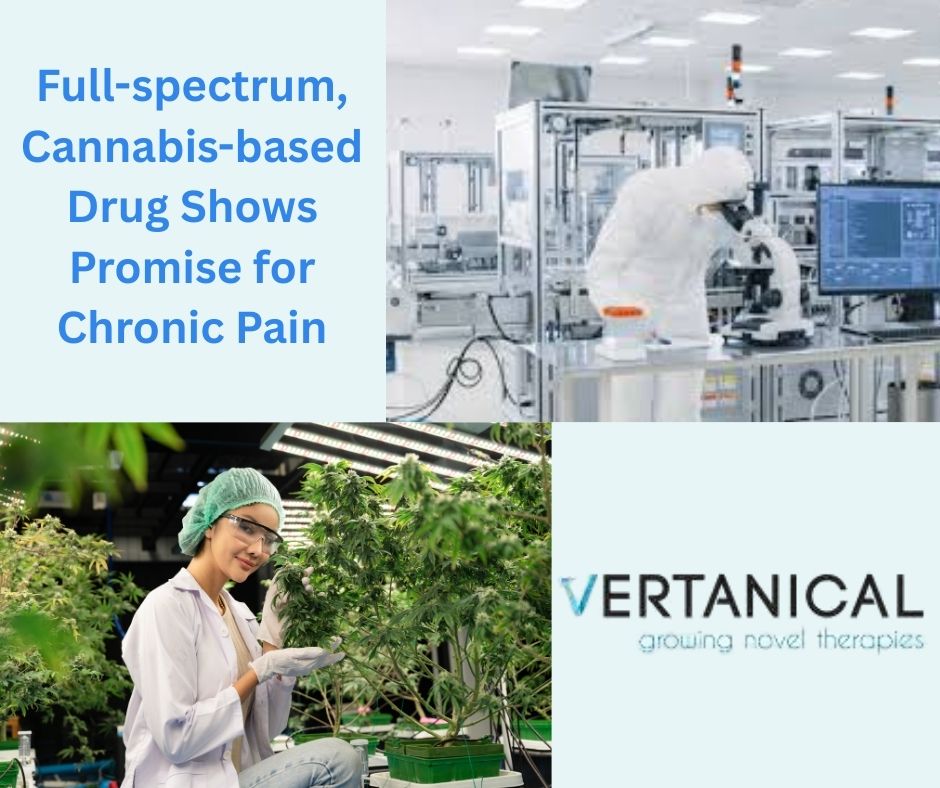
A new pharmaceutical cannabis medicine, VER-01, is being hailed as a potential breakthrough for chronic low back pain, a condition affecting hundreds of millions worldwide. Developed by German company Vertanical and expected to launch in Europe in 2026 under the brand name Exilby, VER-01 is best understood as a THC-dominant, full-spectrum cannabis extract, similar in concept to a high-quality full-spectrum medical cannabis oil. Each dose contains 2.5 mg of THC, along with smaller amounts of cannabigerol (CBG) and cannabidiol (CBD), plus a wide range of naturally occurring terpenes and bioactive compounds. Delivered orally as liquid drops in a sesame oil carrier, the formulation mirrors what many clinicians would recognize as a carefully standardized, pharmaceutical-grade full-spectrum THC product.
What sets VER-01 apart is the strength of the clinical data behind it. Two large randomized controlled trials involving more than 1,300 patients across multiple European countries found that VER-01 provided significantly better pain relief than opioids, while also improving sleep quality. Importantly, patients did not experience opioid-induced constipation, one of the most common and debilitating side effects of opioid therapy. Researchers also found no evidence of withdrawal symptoms after treatment ended, a critical finding given the ongoing global opioid crisis.
The drug’s effectiveness appears particularly strong for neuropathic pain, a notoriously difficult-to-treat form of chronic pain caused by nerve damage. Researchers attribute this to the product’s multi-compound, entourage-based pharmacology, noting that CBG contributes anti-nociceptive effects, while terpenes such as β-caryophyllene and α-bisabolol help down-regulate inflammatory pathways. Unlike single-molecule cannabis drugs, VER-01 leverages more than 100 naturally occurring cannabis compounds, offering a stable, repeatable alternative to traditional flower-based prescriptions that can vary widely in composition.
With chronic pain treatments still dominated by NSAIDs and opioids—both of which carry serious long-term risks—VER-01 could mark a significant shift in how pain is managed medically. Vertanical has already secured authorization in Germany, with access to the broader EU market expected through mutual recognition, and additional trials underway in the UK and United States. If approved, VER-01 may become the first true “blockbuster” medical cannabis drug, demonstrating that THC-dominant, full-spectrum formulations can meet the highest standards of modern pharmaceutical science while offering a safer long-term alternative to opioids.
|
|
|
Medical Cannabis Shows Promise for Symptom Relief in Advanced Pancreatic Cancer
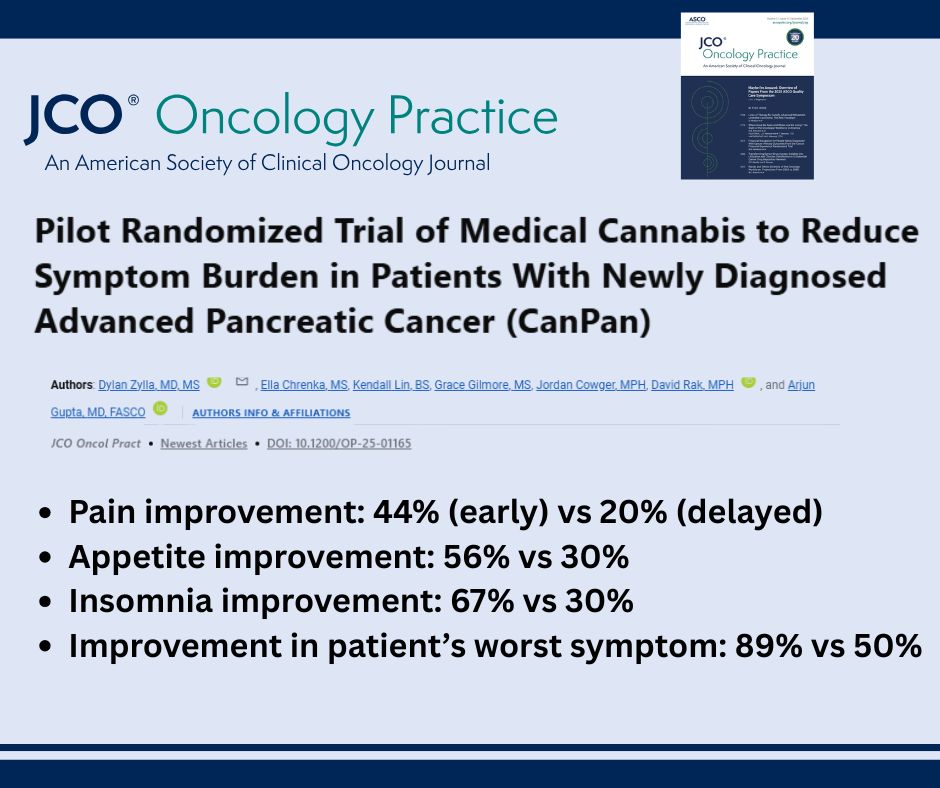
A new randomized pilot trial presented at the 2026 ASCO Gastrointestinal Cancers Symposium suggests that early access to medical cannabis may help ease symptom burden in patients with advanced pancreatic cancer, with minimal side effects. The study followed 32 patients with newly diagnosed locally advanced or metastatic pancreatic cancer, a group known to experience high rates of pain, insomnia, appetite loss, and anxiety despite standard supportive care. Patients who received early access to medical cannabis through Minnesota’s state program reported greater improvement in several key symptoms compared to those who had delayed access.
At eight weeks, patients in the early-access group experienced numerically higher improvement in pain, appetite, and insomnia, along with a trend toward reduced opioid use. Insomnia, one of the most common and difficult symptoms to manage, showed the strongest signal of benefit. Importantly, side effects such as dizziness, dry mouth, and concentration issues were uncommon and generally mild. Researchers noted that patient education emphasizing a “start low, go slow” approach likely contributed to the favorable safety profile. Most participants used oral cannabis formulations, found the process easy and practical, and said they would recommend the intervention to other patients.
While the study was small and not designed to draw definitive conclusions, it demonstrates that medical cannabis can be safely integrated early in cancer care and studied rigorously through partnerships with state medical cannabis programs. The findings support further research into cannabis as a tool for managing complex cancer-related symptoms, particularly in conditions like pancreatic cancer where quality of life is often severely impacted and current options remain limited.
|
|
|
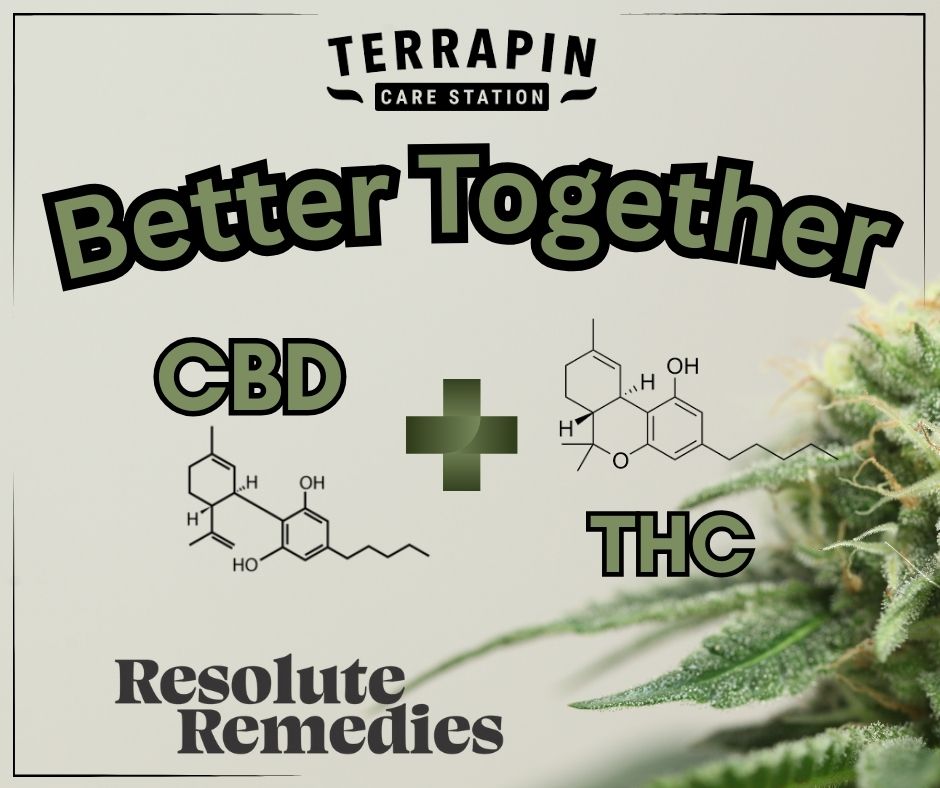
Terrapin’s CBD-Rich Cannabis: A Different Kind of Relief
Terrapin has built a strong reputation in Pennsylvania’s medical cannabis program for offering CBD-rich strains that focus on therapeutic benefit rather than intensity. Products like The Wife, Lemon G, Blue Lemon Dream CBD, and Electric Blanket CBD reflect a thoughtful approach to patient care, particularly for individuals seeking support for chronic pain, inflammation, anxiety, and daily stress. These strains provide relief that many patients describe as steady, functional, and easier to incorporate into everyday life.
CBD plays a central role in this experience. Research and real-world patient use consistently show that CBD can help reduce inflammatory signaling, calm overactive stress responses, and support pain modulation, especially when used regularly. Terrapin’s CBD-forward genetics are paired with terpene profiles that reinforce these effects. Strains like Electric Blanket CBD, rich in myrcene, linalool, and beta-caryophyllene, are often chosen for evening comfort and relaxation, while Lemon G, Lemon Magik #1 CBD, and Blue Lemon Dream CBD offer more uplifting, daytime-friendly options without sacrificing therapeutic value.
Terrapin’s approach also recognizes that small, balanced amounts of THC can work alongside CBD to enhance overall effectiveness, particularly for pain and inflammation, without dominating the experience. This philosophy extends beyond flower to measured options available through Terrapin and Resolute Remedies, making CBD-rich cannabis more accessible to patients who prefer consistent dosing. In a market increasingly focused on potency alone, Terrapin continues to serve the many Pennsylvania patients who benefit most from balance, clarity, and dependable relief.
|
|
|
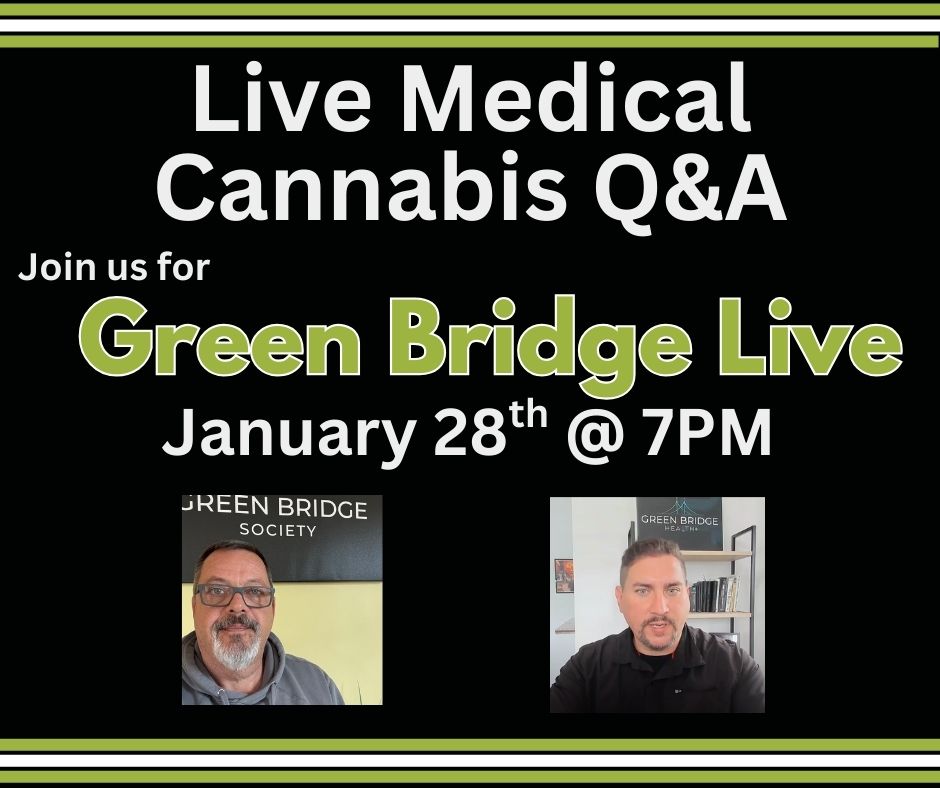
Green Bridge Live - January 28th @ 7PM
At Green Bridge Society, we believe education is key to making the most of medical cannabis. That’s why we’re hosting live online Q&A sessions, designed to provide trusted, science-backed information to patients, caregivers, and anyone looking to learn more about medical cannabis. Join us for this free online event on January 28th at 7PM. We will also cover some of the newest research. Click on the button below to register! Check out clips from previous events on our YouTube Channel!
|
|
|
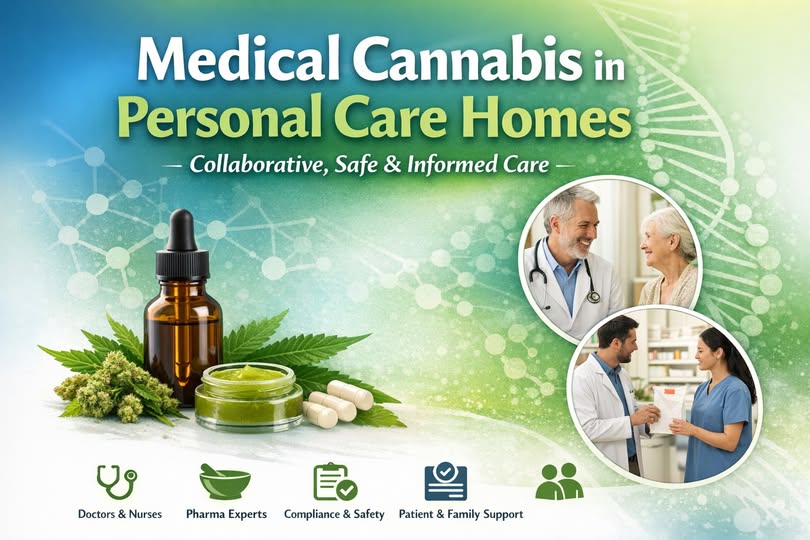
Compassionate Care: Medical Cannabis in Senior Living
As more seniors explore medical cannabis for comfort, sleep, pain, and quality of life, senior living communities are being asked to navigate a new reality—often without clear guidance. Green Bridge Society’s Facility Education & Resident Support program was designed to meet this need with a structured, stigma-free approach that prioritizes safety, documentation, and clarity for staff, residents, and families. The program emphasizes non-combustion options such as tinctures, capsules, and topicals, along with pharmacist-led safety screening, medication interaction awareness, and fall-risk considerations that align with real facility workflows.
What sets this model apart is its focus on implementation, not just education. Green Bridge helps facilities establish repeatable routines, including intake questions, documentation templates, and clear hold parameters so staff know exactly what to monitor and when to escalate concerns. A pharmacist-led consult pathway supports residents over time, helping them dial in measured-dose regimens safely while keeping medical decision-making with the resident’s treating clinicians. When state certification is needed, Green Bridge can coordinate with certifying providers to support residents entering or renewing their program.
Why does this matter? Without a defined process, facilities can face inconsistent documentation, avoidable side effects, staff uncertainty, and family concerns. A calm, defensible framework protects everyone involved. Green Bridge Society’s approach combines education, workflow support, and clinical collaboration—giving senior living teams the structure they need to respond confidently as medical cannabis becomes a more common part of resident care conversations.
|
|

January Giveaway!
We are giving away 5 Trulieve swag bags. Email us at info@greenbridgesociety.com with your favorite Trulieve dispensary or product by January 28th for a chance to win. Please include your full name and mailing address. Five winners will be selected at random.
|
 |
|
If you are coming due for your yearly card renewal or you are new to medical cannabis and need to be certified, go to greenbridgesociety.com or call (814) 360-5353 to start the process today! With our staff of full-time physicians and friendly support team, Green Bridge Society makes getting certified via telemedicine quick and easy. Certifications are typically completed the same or the next day for most patients. Renewals are just $50, and our industry experts provide full state portal support.
Thank you for your support of Green Bridge and medical cannabis!
|
|