| GREEN BRIDGE SOCIETY |
Patient & Industry Education |
|
| |
 February Newsletter February Newsletter
Happy February! Unfortunately, the groundhog has called for 6 more weeks of Winter, but we can still celebrate the benefits of medical cannabis! We received great feedback on the Terrapin Giveaway! Their Lewisburg location received the most votes with Lock Haven and Bellefonte close behind. "I Scream Snake" (formerly known as ICC and Ice Cream Cake) was their most popular strain among our readers! We appreciate everyone who joined us for the Green Bridge Live Q&A session on Cannabis and Custody. See below for more information on all of our upcoming events.
Check out our Verilife Giveaway below!
Coming due for renewal? Visit greenbridgesociety.com
or call (814) 360-5353. Renewals: $50 • New patients: $125
|
|
| |
Ron’s Corner
February: Beyond the Buzz (Learn Not To Burn)
I’m not the cannabis police — I’m the “let’s get you better outcomes” guy.
If you combust flower, I’m not here to shame you. I just want you to know what’s happening in real life: when cannabis is burned, a lot of what you paid for never makes it to you. The hotter the heat, the more you lose — and your lungs take the hit along with it.
One more important note: in most medical programs (including Pennsylvania), combustion/smoking isn’t permitted. Even though dispensaries sell flower (bud), it’s intended for vaping at lower temperatures or for making edibles and oils — not for burning.
And here’s my bigger point: the buzz isn’t the goal. Better health is.
I smoked with combustion most of my life. I’m not pretending I didn’t. But once I switched to low-temp vaping and started focusing on outcomes — sleep, inflammation, anxiety, pain, clarity — everything changed for me.
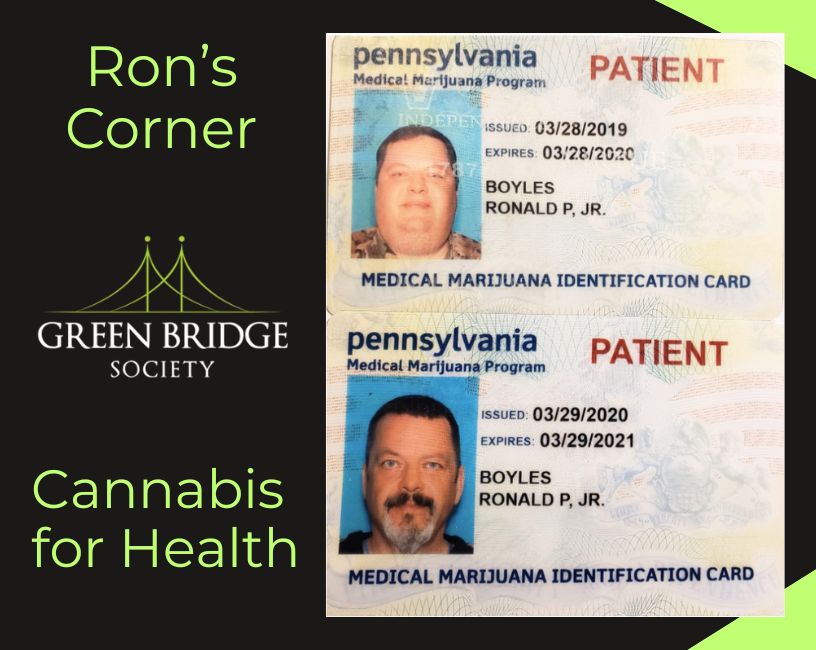
You’ll see it in the two photos I’m sharing here: my early PA patient card photo vs. the next year. I went from about 360 lbs and unhealthy to about 200 lbs and healthy — and I did it using only cannabis as my tool. Not by chasing the biggest THC number, but by learning what works for my body and choosing methods that support health instead of fighting it.
Had I known I could do this years earlier, my life would have looked very different. That’s what set me on the primary mission of Green Bridge Society: to provide real education and practical resources so patients can get better outcomes from cannabis.
You can do so much more with cannabis than feel good for a couple of hours.
Combustion can feel familiar, and it can work fast — but for true medical relief, most people do better when they expand the toolbox:
-
Low-temp vaping flower (similar experience, without the smoke)
-
Tinctures, capsules, or troches (more consistent, longer-lasting outcomes)
-
CBD and other cannabinoids like CBG/CBN (often the missing piece for steadier relief)
And I’ll say the quiet part out loud: less THC can actually work better.
I tell patients all the time — THC is the sugar that helps the medicine go down. A little can help. Too much can hijack the whole experience. The goal isn’t to see how high you can get… it’s to get your life back.
If you combust, you’re not “doing it wrong.” Just know what’s happening — and what you may be giving up. If you’re curious about switching (or you tried once and hated it), reach out. We’ll help you find something that fits you.
— Ron Boyles
Founder, Green Bridge Society
|
|
|
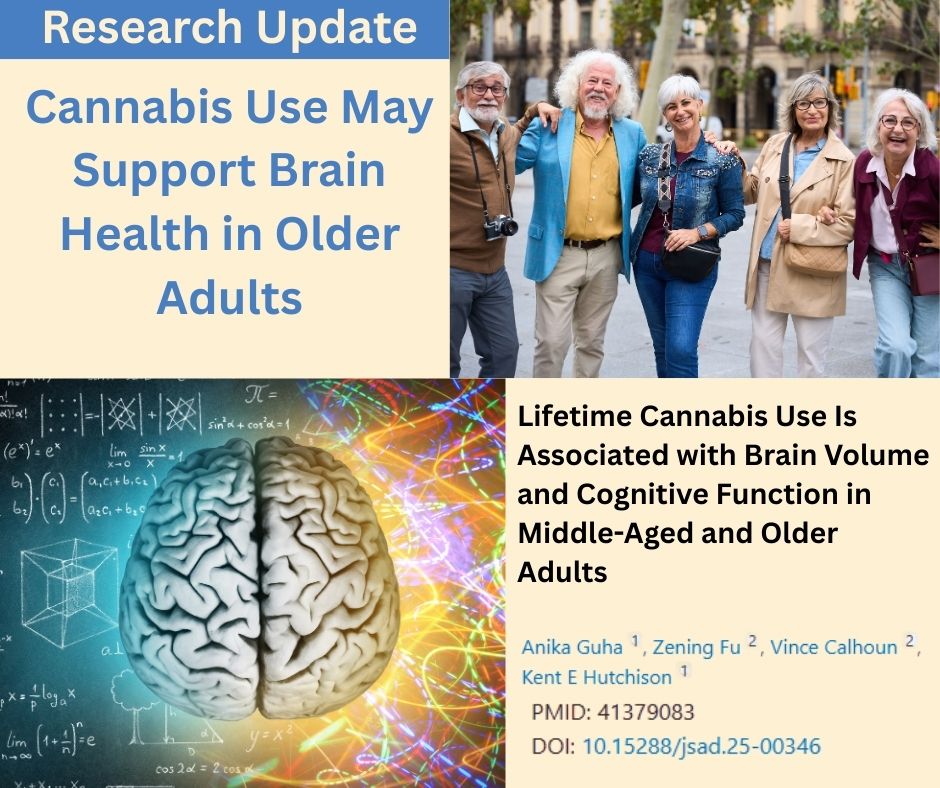
Study Suggests Cannabis Use Supports Brain Health in Older Adults
For years, cannabis research has focused mainly on teens and young adults, often highlighting potential risks to memory and attention. But a new large study is telling a very different story for middle-aged and older adults. Using data from the UK Biobank, researchers examined brain scans and cognitive testing from more than 26,000 adults ages 40 to 77 and found that cannabis use was associated with larger brain volumes and better cognitive performance as people age.
Led by Anika Guha and her research team, the study looked at specific brain regions rich in CB1 cannabinoid receptors. These areas are involved in memory, learning, focus, and decision-making. As we get older, these regions often shrink due to normal aging and neurodegeneration. Interestingly, cannabis users in this study tended to show preserved brain volume in these regions, along with stronger performance in learning, processing speed, and short-term memory compared to non-users.
One of the most encouraging findings was that moderate cannabis use showed the most consistent benefits. Moderate users generally had larger brain volumes and better cognitive scores than both non-users and heavy users. This supports what many clinicians already emphasize: thoughtful, intentional use matters. The study also found that cannabis effects are nuanced, with one brain region showing reduced volume, reminding us that cannabis is not a one-size-fits-all solution and should be used with guidance and purpose.
Overall, this research challenges the outdated idea that cannabis is inherently harmful to brain health. Instead, it suggests that cannabis may interact with the aging brain in protective ways, possibly through anti-inflammatory and neuroprotective effects of the endocannabinoid system. While more research is still needed, especially around specific products like THC-dominant versus CBD-rich formulations, these findings are promising for patients using medical cannabis to support sleep, pain management, and overall quality of life as they age.
|
|
|
Cannabis Drinks Linked to Lower Alcohol Use in New Study
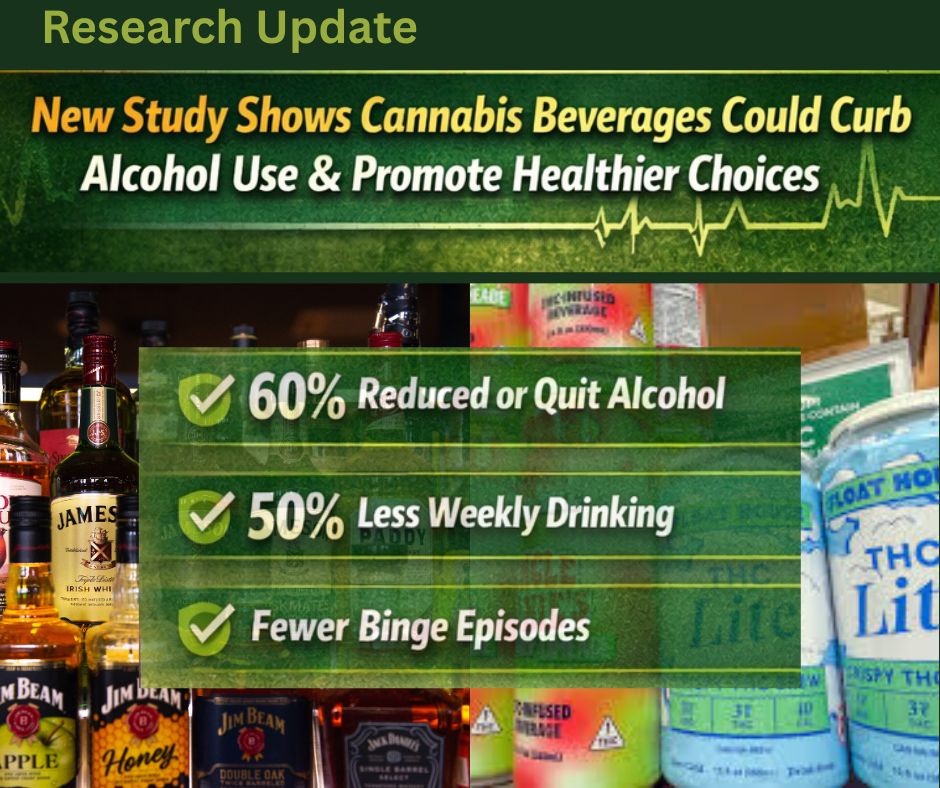
Cannabis-infused beverages such as THC seltzers and tonics may help people drink less alcohol, according to a new study from researchers at the University at Buffalo. In a nationwide survey of adults who use cannabis, more than 60 percent of people who drank cannabis beverages reported that they either reduced or completely stopped drinking alcohol. On average, participants cut their weekly alcohol intake in half and reported far fewer binge-drinking episodes after switching to cannabis drinks.
The study, led by Jessica Kruger and Daniel Kruger, found that cannabis beverages may work especially well as an alcohol substitute because they fit naturally into social settings. Like beer or hard seltzer, cannabis drinks are consumed slowly, often in bars, restaurants, or at social gatherings. This allows people to “have a drink in hand” without the risks commonly associated with alcohol, such as liver damage, increased cancer risk, and impaired judgment.
Researchers also found meaningful reductions in harmful drinking patterns. Before using cannabis beverages, many participants reported frequent binge drinking. Afterward, more than 80 percent said they binge drank less than once a month or not at all. Most cannabis beverage users reported consuming just one drink per occasion, typically with 10 milligrams of THC or less. These patterns suggest that cannabis drinks may encourage more mindful, lower-risk consumption compared to alcohol.
From a health perspective, this matters. Alcohol is linked to nearly 200 medical conditions and is a leading preventable cause of cancer and injury. Cannabis, while not risk-free, has consistently been shown to carry lower overall harm than alcohol, especially when consumed in non-smokable forms like beverages. Cannabis drinks also avoid lung irritation from smoking and allow for clearly labeled, measured dosing, particularly when purchased from regulated dispensaries.
As lawmakers debate how to regulate hemp-derived THC beverages, this research highlights an important point: cannabis drinks are not just another recreational product. They may serve as a practical harm-reduction tool for adults looking to cut back on alcohol while still participating in social rituals. While more long-term research is needed, current evidence suggests that responsibly used cannabis beverages could play a positive role in public health by helping people drink less and reduce alcohol-related risks.
|
|
|
Study Links Cannabis Legalization to Reduced Daily Opioid Use
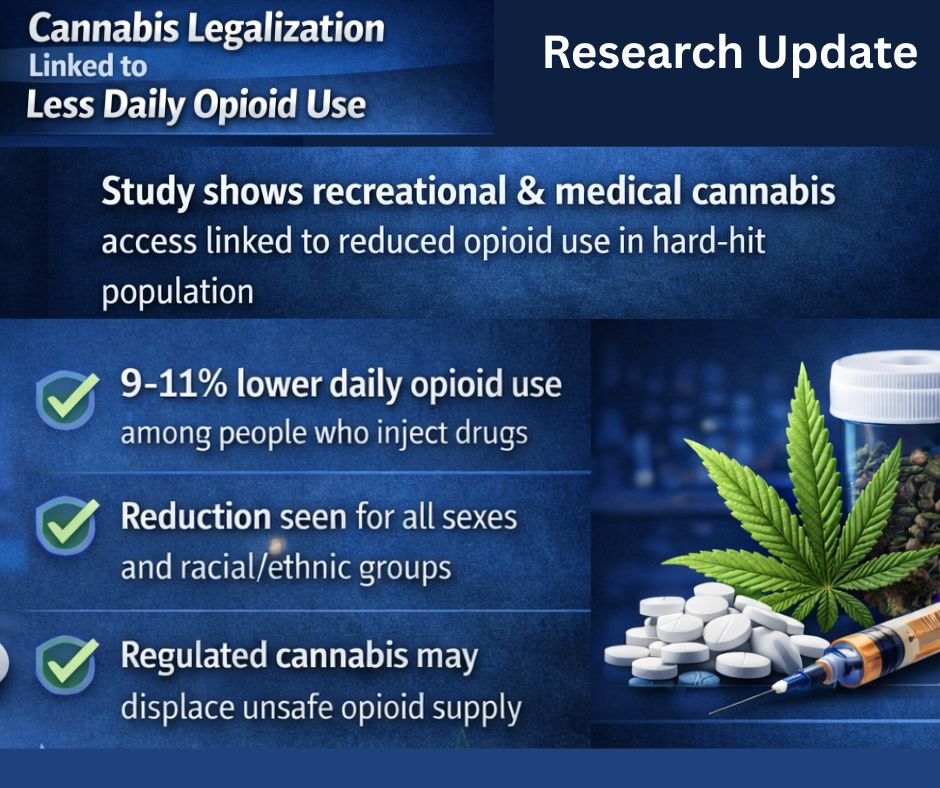
A new study from the Boston University School of Public Health suggests that broader cannabis legalization may help reduce daily opioid use among people most affected by the opioid crisis. Researchers found that states allowing both medical and adult-use cannabis saw a 9 to 11 percent reduction in daily opioid use among people who inject drugs, compared to states with medical-only cannabis laws.
The study, led by Danielle Haley and published in Drug and Alcohol Dependence, analyzed data from nearly 29,000 individuals across 13 states over a ten-year period. The findings support the idea that access to a regulated, safer alternative like cannabis may allow some people to substitute away from an increasingly dangerous and unpredictable opioid supply. This is especially significant given that opioids are involved in more than 75 percent of fatal overdoses in the United States.
Importantly, the reduction in opioid use was seen across sexes and racial and ethnic groups. Researchers emphasize that this does not mean cannabis is risk-free, but rather that legal, regulated cannabis access may function as a powerful harm-reduction tool, lowering overdose risk even without increasing overall cannabis use. As cannabis policy continues to evolve nationally, studies like this highlight its potential role in addressing one of the country’s most urgent public health crises.
|
|
|
Cannabis Rescheduling Update: What Patients Should Know
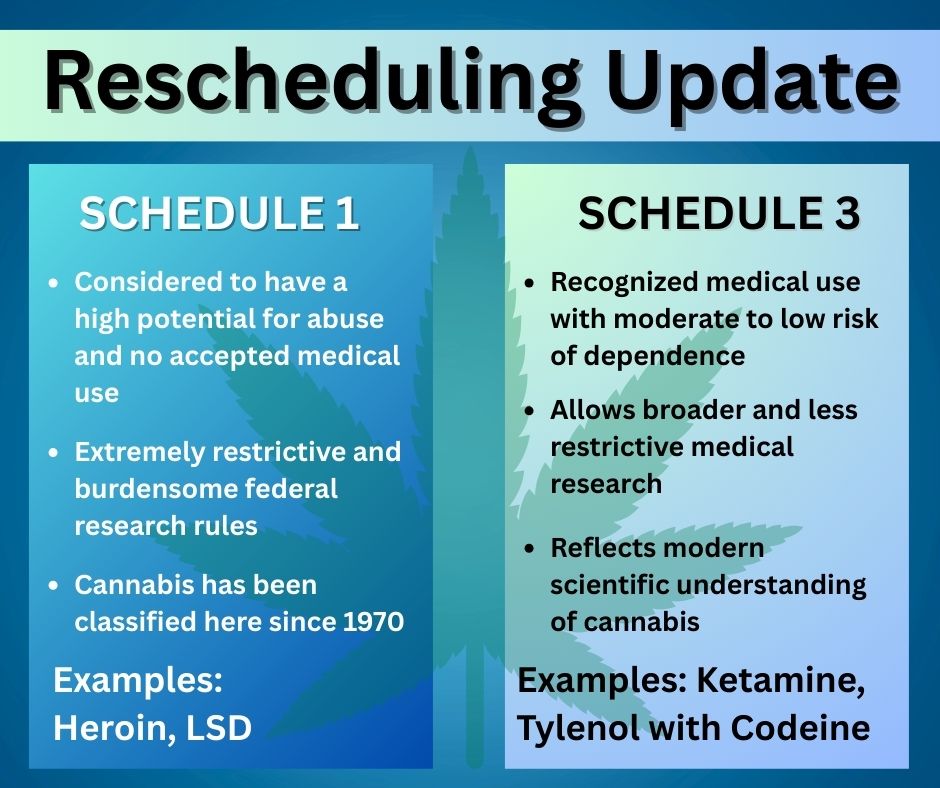
Federal cannabis policy may finally be moving forward, but the process is still underway. In December 2025, President Donald Trump directed federal agencies to complete the formal rulemaking process to move cannabis from Schedule 1 to Schedule 3 under the Controlled Substances Act. This order instructs the Department of Justice and the Drug Enforcement Administration to finalize the review, but it does not immediately change federal law.
Rescheduling to Schedule 3 would be a meaningful shift. It would formally recognize that cannabis has accepted medical use and a lower risk profile than drugs currently listed in Schedule 1. However, it would not legalize cannabis nationwide or override existing state laws. The DEA must still complete its public rulemaking process, which includes review, comment, and publication of a final rule. That timeline remains uncertain, and debate continues among lawmakers and regulators.
For patients, the most important impact of rescheduling would be improved access to research and clearer federal recognition of medical use. Schedule 3 status could make it easier to study cannabis in clinical settings and may reduce some of the regulatory and financial barriers that have slowed medical research for decades. While it is not a cure-all, rescheduling would represent a significant step toward a more science-based federal cannabis policy.
|
|
|
Compassionate Care: Medical Cannabis in Senior Living
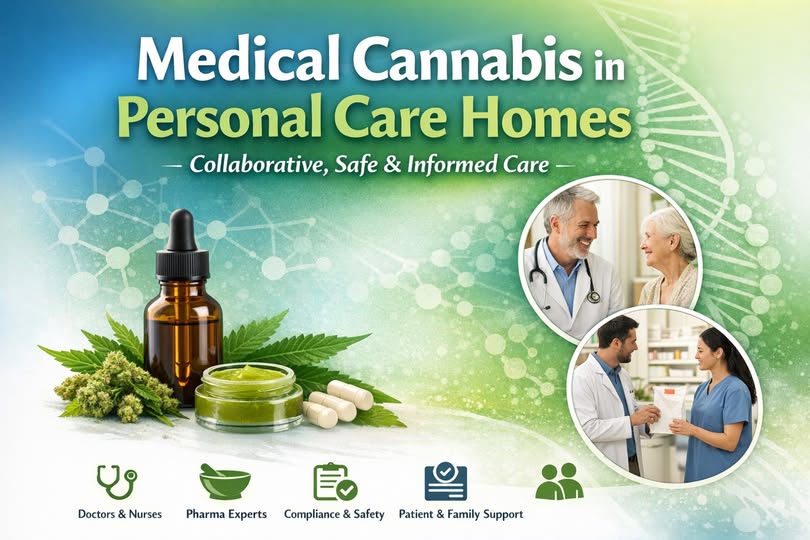
As more seniors explore medical cannabis for comfort, sleep, pain, and quality of life, senior living communities are being asked to navigate a new reality—often without clear guidance. Green Bridge Society’s Facility Education & Resident Support program was designed to meet this need with a structured, stigma-free approach that prioritizes safety, documentation, and clarity for staff, residents, and families. The program emphasizes non-combustion options such as tinctures, capsules, and topicals, along with pharmacist-led safety screening, medication interaction awareness, and fall-risk considerations that align with real facility workflows.
What sets this model apart is its focus on implementation, not just education. Green Bridge helps facilities establish repeatable routines, including intake questions, documentation templates, and clear hold parameters so staff know exactly what to monitor and when to escalate concerns. A pharmacist-led consult pathway supports residents over time, helping them dial in measured-dose regimens safely while keeping medical decision-making with the resident’s treating clinicians. When state certification is needed, Green Bridge can coordinate with certifying providers to support residents entering or renewing their program.
Why does this matter? Without a defined process, facilities can face inconsistent documentation, avoidable side effects, staff uncertainty, and family concerns. A calm, defensible framework protects everyone involved. Green Bridge Society’s approach combines education, workflow support, and clinical collaboration—giving senior living teams the structure they need to respond confidently as medical cannabis becomes a more common part of resident care conversations.
|
|
|
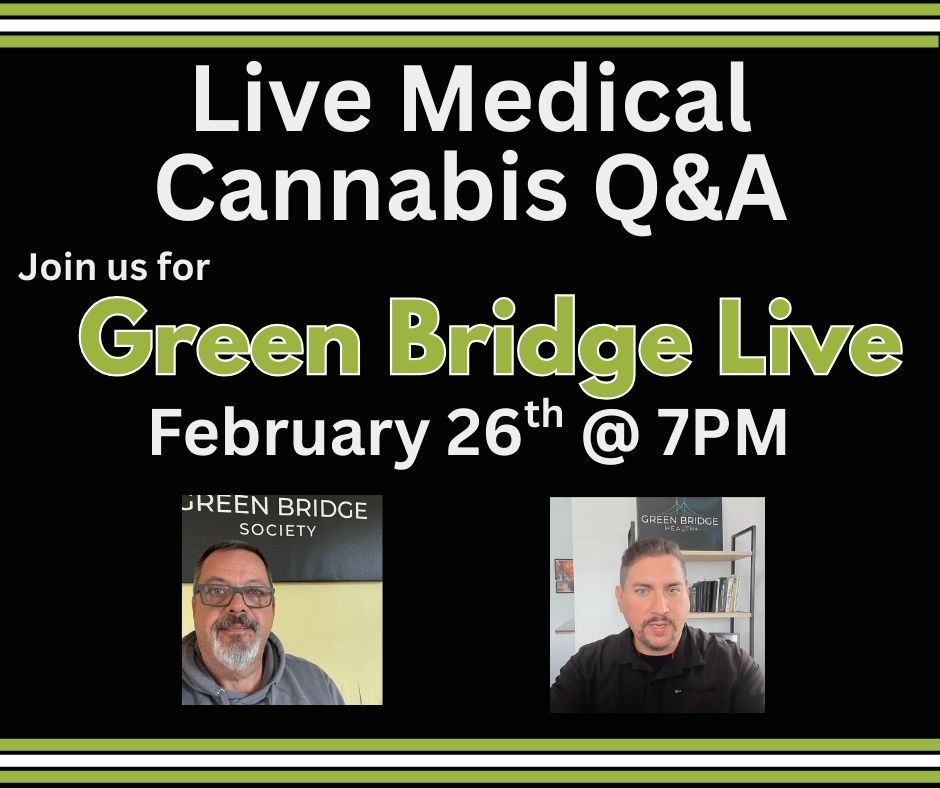
Green Bridge Live - February 26th @ 7PM
Live Medical Cannabis Questions and Answers
At Green Bridge Society, we believe education is key to making the most of medical cannabis. That’s why we’re hosting live online Q&A sessions, designed to provide trusted, science-backed information to patients, caregivers, and anyone looking to learn more about medical cannabis. Join us for this free online event on February 26th at 7PM. We will also cover some of the newest research. Click on the button below to register! Check out clips from previous events on our YouTube Channel!
|
|
Ohio Cannabis Industry Splits Over Effort to Block New Marijuana Law
Just two years after Ohio voters approved adult-use cannabis, the state’s marijuana and hemp industries are openly divided. A new referendum effort aims to block Senate Bill 56, a law signed in December that modifies Ohio’s recreational marijuana framework and bans intoxicating hemp products. The proposal cleared an early hurdle this week when Attorney General Dave Yost approved summary language, allowing signature collection to begin.
Supporters of the referendum, led by Ohioans for Cannabis Choice, argue the law goes too far. They oppose new THC potency caps, stricter packaging and transport rules, and a full ban on intoxicating hemp-derived products. Small business owners and hemp farmers say these products help consumers manage sleep issues, stress, PTSD, and recovery, and they view S.B. 56 as an unnecessary restriction on consumer choice and voter intent.
Much of Ohio’s regulated cannabis industry disagrees. Trade groups and the organization behind the 2023 legalization ballot measure say the law protects public health while preserving the legal marijuana market voters approved. They argue S.B. 56 closes loopholes that allowed unregulated hemp products and out-of-state marijuana to compete with Ohio’s licensed system, and that most legal cannabis consumers will notice little change.
Now the decision returns to voters. To qualify for the November ballot, organizers must collect nearly 250,000 signatures statewide in just 90 days. If successful, Ohioans will once again decide how tightly cannabis and hemp should be regulated, in a debate that could influence policy well beyond the state’s borders.
|

|
February Swag Giveaway!
We are giving away 5 Verilife swag prizes. Email us at info@greenbridgesociety.com with your favorite Verilife dispensary or product by February 24th for a chance to win. Please include your full name and mailing address. Five winners will be selected at random. Check out one of their 9 locations in Central and Eastern Pennsylvania. Special shout-out to their wonderful dispensary team in Shamokin!
|
 |
|
If you are coming due for your yearly card renewal or you are new to medical cannabis and need to be certified, go to greenbridgesociety.com or call (814) 360 5353 to start the process today! With our staff of full-time physicians and friendly call center, Green Bridge Society makes getting certified via telemedicine quick and easy. Certifications are typically completed the same or the next day for most patients. Renewals are just $50, and our industry experts provide full DOH portal support.
Thank you for your support of Green Bridge and Medical Cannabis!
|
|